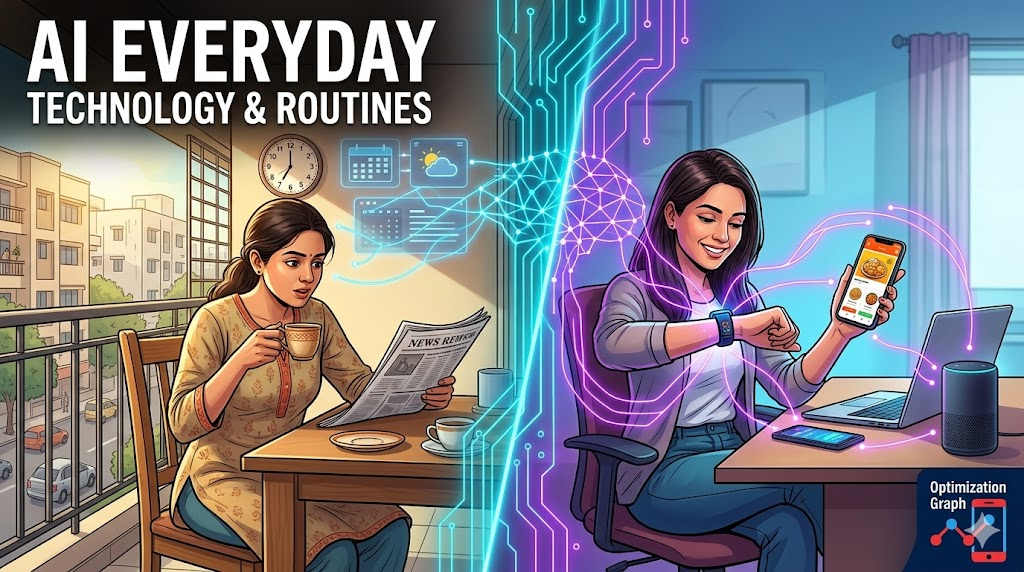
Artificial Intelligence (AI) has officially transitioned from the research lab to the living room. What was once the stuff of science fiction is now the backbone of modern living, quietly influencing everything from our morning alarms to our evening entertainment.
As we move through 2026, AI is no longer a “new” feature; it is a foundational layer that enhances efficiency, safety, and personal wellness. Here is how AI is fundamentally changing the way we live.
1. Personalized Recommendations Everywhere
The most subtle yet powerful way AI affects us is through the “curated experience.” Whether you are browsing a streaming service, shopping for groceries, or scrolling through social media, AI is working behind the scenes.
- Predictive Analysis: Algorithms analyze your search history and past interactions to suggest content you didn’t even know you wanted.
- Customer Satisfaction: By cutting through the “hassle of endless browsing,” AI helps you find relevant products and entertainment faster, making the digital world feel tailor-made for you.
2. Smart Home Assistants as Daily Operatives
Home assistants like Amazon’s Alexa, Google Assistant, and Apple’s Siri have evolved far beyond simple voice-activated speakers. They are now the “brains” of the home.
- Routine Automation: You can now set complex routines where a single command triggers the lights to dim, the thermostat to adjust, and your daily briefing to begin.
- Accessibility: These tools have become life-changing for individuals with mobility challenges, allowing for full environmental control through voice or gesture.
3. Enhanced Security and Predictive Monitoring
AI has transformed home security from reactive to proactive. Modern smart doorbells and cameras don’t just record footage; they interpret it.
- Facial Recognition: Systems can now differentiate between a family member, a delivery driver, and a stranger.
- Reduced False Alarms: By learning the “normal” patterns of your household, AI can ignore a pet running through the yard while alerting you to unusual movement in real-time.
4. AI-Driven Health and Wellness
Wearable technology has turned into a 24/7 personal health consultant. Devices like the Apple Watch and Fitbit use AI to do more than count steps.
- Trend Recognition: AI identifies long-term patterns in your heart rate, sleep quality, and stress levels.
- Early Detection: Advanced apps can now spot early indicators of irregular heartbeats (arrhythmias) or high-stress triggers, often prompting a doctor’s visit before physical symptoms even appear.
5. The Evolution of Domestic Robotics
The days of simple “bump-and-turn” vacuum robots are over. Modern autonomous cleaning devices use LiDAR and sophisticated mapping to navigate complex floor plans.
- Multi-Tasking: Beyond vacuuming, the next generation of domestic AI is moving into dusting, watering plants, and even sorting laundry.
- Seamless Integration: These robots can now be controlled remotely, allowing you to “clean the house” while you are still at the office.
The Future: A Fully Integrated Home
The next frontier for AI is the Internet of Things (IoT), where your devices talk to each other without you being the middleman. Imagine a smart fridge that notices you are low on eggs, checks your fitness tracker to see your protein goals, and automatically adds the item to your digital grocery list.
As technology operates more seamlessly in the background, it grants us the most valuable resource of all: time.