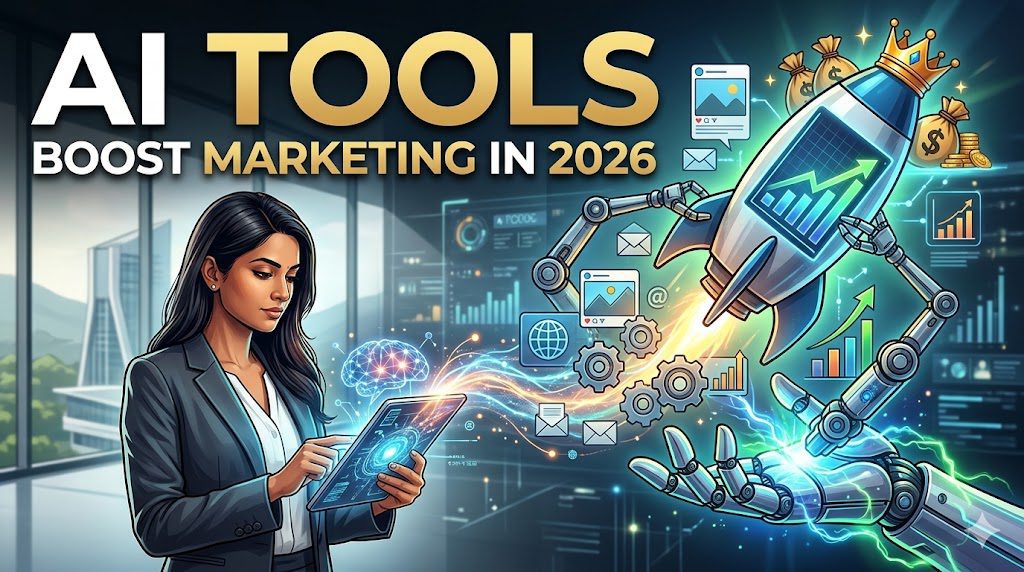
In the modern digital landscape, marketing has moved beyond simple creative intuition. Today, the most successful brands use Artificial Intelligence (AI) to make smarter, faster, and more efficient choices. Whether you are a small business owner or a marketing executive, AI tools are no longer a luxury—they are a strategic necessity.
As we move through 2026, the integration of AI allows marketers to understand their audience on a granular level and automate the “busy work” that once
took hours. Here is how you can effectively use AI tools to supercharge your marketing performance.
Why Your Business Needs AI Marketing Now
Marketing complexity is at an all-time high. Customers expect hyper-personalized experiences, and the sheer volume of data can be overwhelming for human teams alone. AI solves these challenges through:
- Deeper Audience Insights: AI analyzes search history and engagement to deliver messages that truly resonate.
- Time-Saving Automation: Tasks like email sequencing and social media scheduling are handled by algorithms, freeing your team for high-level strategy.
- Real-Time Data Decisions: Instead of waiting for monthly reports, AI tools provide live insights, allowing you to pivot campaigns instantly.
Top AI Marketing Tools to Boost Performance
To see measurable growth, you must focus on tools that automate routine tasks while enhancing the customer experience.
1. AI-Powered Email Automation
Modern email marketing uses predefined workflows to send the right message at the right time. Instead of generic blasts, AI analyzes user behavior to recommend specific content or send a “re-engagement” discount exactly when a customer is most likely to click.
- Impact: Higher open rates and stronger long-term customer relationships.
2. Social Media Management Tools
Platforms like Socinator, Buffer, and Sprout Social use AI to identify patterns in audience activity. They don’t just post content; they suggest the optimal time to post for maximum reach.
3. Content and SEO Optimization
AI tools now assess grammar, readability, and tone to ensure your brand voice remains consistent. Tools like Grammarly or specialized SEO platforms help refine your copy to ensure it ranks on the first page of search results.
4. Market Intelligence and Competitor Tracking
Tools like Crayon and SimilarWeb allow you to monitor your competitors’ moves in real time. This proactive approach helps you stay ahead of trends and adjust your pricing or offers before your competitors do.
5. Advanced Business Analytics
Platforms like Google Analytics 4 and Tableau leverage AI to uncover hidden patterns in customer behavior. These tools can predict future buying habits, helping you allocate your budget to the highest-performing channels.
How to Implement AI in 5 Simple Steps
If you are new to AI marketing, follow this structured approach to avoid being overwhelmed:
- Identify Your Weak Points: Do you struggle with slow content creation or low email open rates? Start there.
- Select Targeted Tools: Choose one or two platforms that solve your specific problem (e.g., an AI writer or an automated social scheduler).
- The “Slow-Integration” Method: Automate one channel first. Once your team is comfortable, expand to the next.
- Invest in Training: Ensure your team knows how to interpret the data the AI provides.
- Monitor and Optimize: AI provides the data, but human strategy is required to turn those insights into a winning campaign.
The Bottom Line
AI tools for marketing act as a force multiplier. They don’t replace the human marketer; they empower them to reach more people with better content in less time. By adopting these tools in 2026, you gain a tangible competitive edge and drive faster, measurable growth.